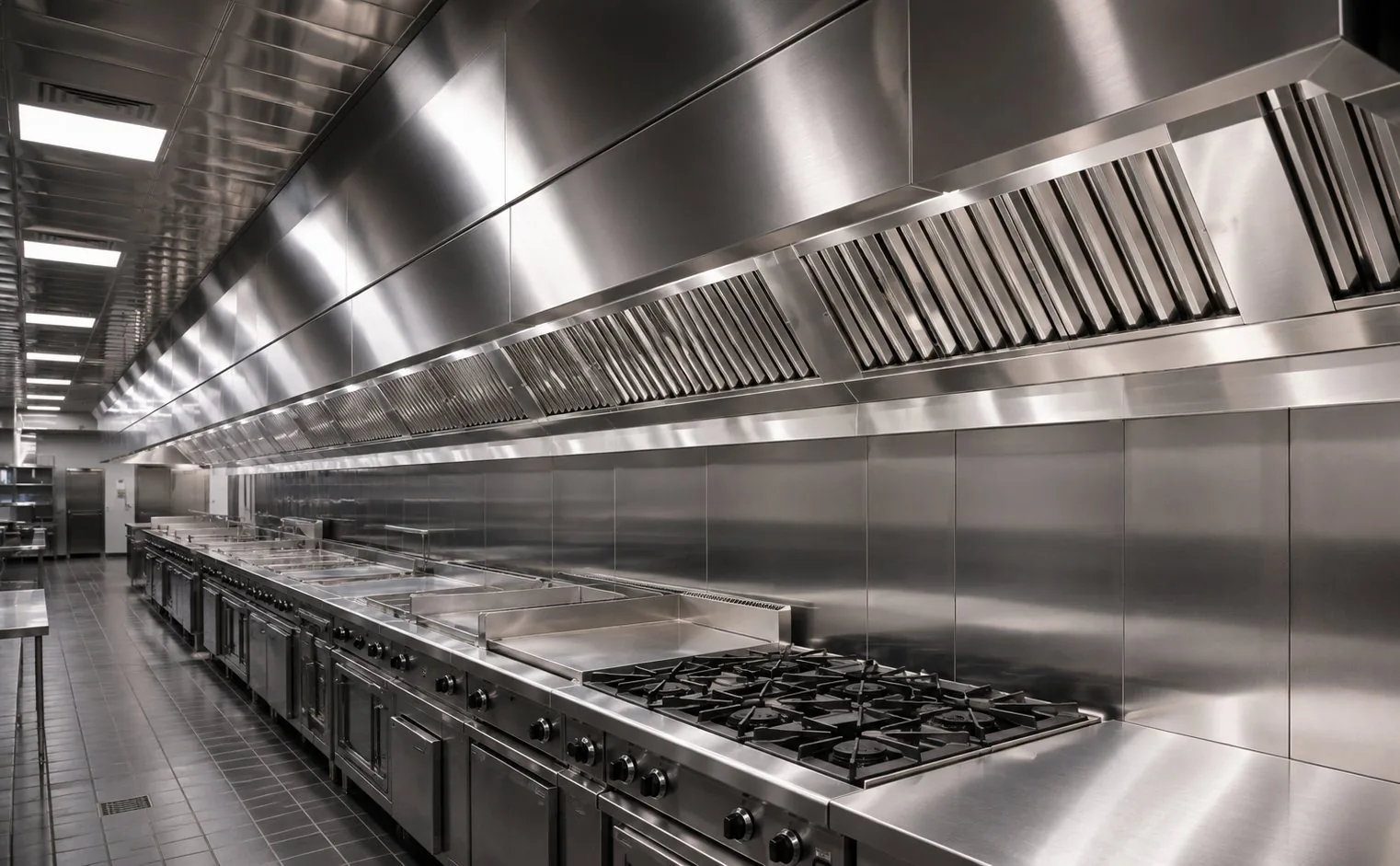
Kitchen hood cleaning service From the hood to the fan on the roof.
A complete cleaning of the accessible exhaust system, performed to the NFPA 96 standard and documented for your fire marshal and your insurer.
since 1995 Phil Ackland
Certified Cleaned to
NFPA 96 24/7 Emergency
Service
What the service includes Grease takes one path.
Cleaned end to end.
Grease leaves your cooking line and travels one route out of the building. We clean every accessible stop on that route with hot water, high pressure washing, and hand scraping, down to bare metal where access allows.
What we will tell you honestly: some duct sections in some buildings cannot be reached without access panels or system modifications. Anything we cannot access is identified and noted on your Service Report, so you know the true condition of your system instead of assuming it. Want the plain-language version of how the whole system works? Read the hood cleaning guide →
-
Hood and canopy
Where the path begins. Degreased inside and out, down to bare metal.
-
Filters
The first line of defense. Removed, washed on both faces, and reinstalled seated correctly.
-
Plenum
The chamber behind the filters, where rising grease collects first and inspectors look first.
-
Accessible ductwork
The route through the building. Scraped and washed wherever access panels and system design allow.
-
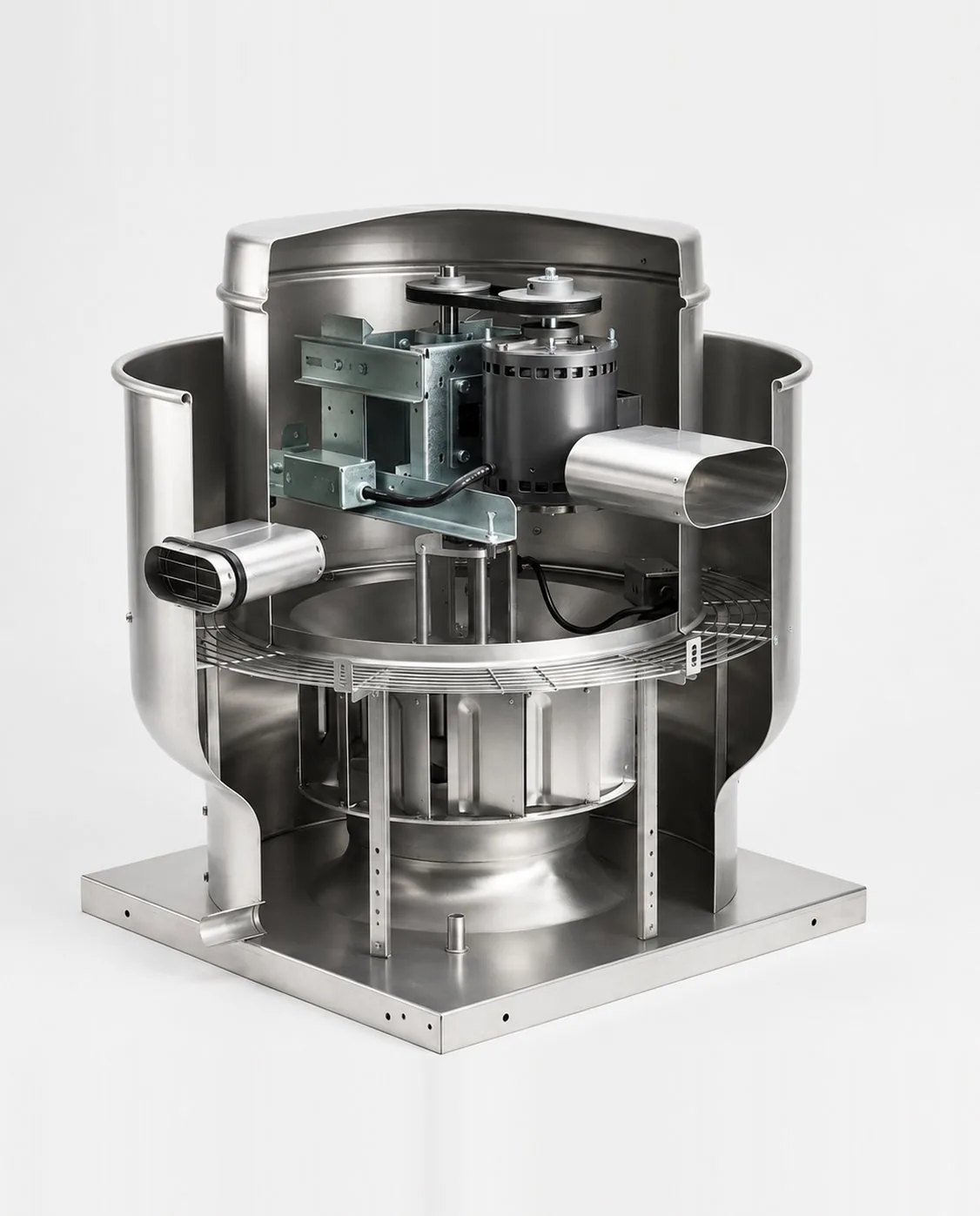
Exhaust fan and grease trap
The end of the line. Blades, housing, and trap degreased, with belts and bearings checked while we are up there.
Emptied, cleaned, and re‑secured.
Dried and polished before we leave.
Included with every service The fan gets checked, not just cleaned.
The exhaust fan does the hardest work in the system, and most cleaning companies never touch it beyond the blades. At each service we check belt tension, wear, and alignment and lubricate the fan bearings. A worn belt is noted on your Service Report and replaced with your approval.
NFPA 96 requires the fan to tip back safely on a hinge so the blades and the ductwork beneath can be properly cleaned. If your fan is not equipped with one, we identify it on your Service Report so you can have a hinge kit installed and keep the whole system cleanable.
How service day works We work while your kitchen sleeps.
Service is scheduled during non-operating hours, so the system is clean and the kitchen is spotless before your first shift arrives.
-
We contact you first
Our scheduler reaches out two to three weeks before your service is due to set a date and time, and you get a reminder call the day before the crew arrives.
-
Your kitchen is protected
Cooking equipment and surfaces are covered with plastic sheeting before any cleaning begins, so nothing in your kitchen is contaminated.
-
The system is cleaned and inspected
The crew washes the accessible system from the hood to the fan, then inspects the completed work before packing up.
-
You get proof of service
A Certificate of Performance goes on the hood with the service date and next due date, and a written Service Report is available on request. We leave the kitchen spotless.
Who does the work Certified crews.
Not contractors.
Trained and experienced in commercial kitchen exhaust systems.
Full coverage on every job, in every building.
A PowerClean supervisor inspects the work on every service.
Our system tracks your NFPA 96 due dates so you never chase a deadline. See the required schedule →
Ready when your kitchen is.
Free estimates across Washington. Send a few photos of your system for a fast quote, or schedule an on-site visit for complex systems.
A member of our team replies within 24 hours.