Fire code and NFPA 96 The code behind
every clean kitchen.
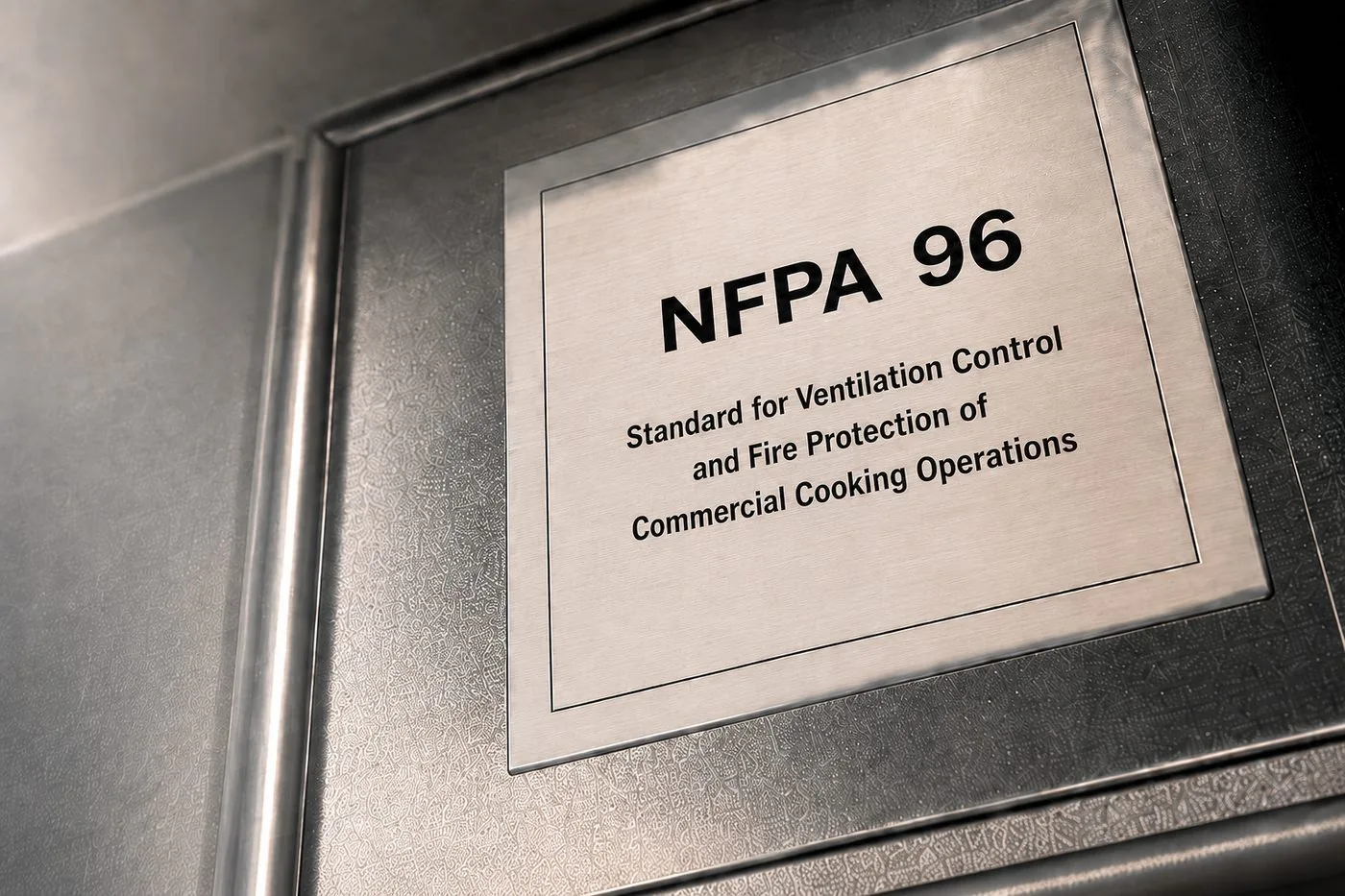
NFPA 96 is the Standard for Ventilation Control and Fire Protection of Commercial Cooking Operations. In Washington State, fire marshals enforce it as part of the fire code, which makes kitchen exhaust cleaning a legal requirement for virtually every commercial kitchen, not a maintenance preference. This page is a plain-English summary of what the standard asks of you.
since 1995 Phil Ackland
Certified Cleaned to
NFPA 96 24/7 Emergency
Service
Who holds you to it Three parties check your exhaust system.
Washington fire marshals follow NFPA 96 as part of the fire code and can cite or shut down kitchens that fall behind.
Grease-laden exhaust systems show up in health inspections long before they show up in fires.
After a kitchen fire, insurers ask for cleaning records. Missing or non-certified service can become an issue in getting a claim paid.
The schedule How often
the code requires
inspection.
NFPA 96 requires the entire exhaust system to be inspected for grease buildup at set intervals by properly trained, qualified, and certified persons, and cleaned when contamination is found. The interval depends on how hard your kitchen cooks.
A note on editions: NFPA 96 is revised on a regular cycle, and your local authority having jurisdiction enforces the adopted edition. The requirements summarized on this page are longstanding provisions of the standard. When in doubt, your fire marshal has the final word, and we work to what they enforce. New to the system itself? Start with the hood cleaning guide →
Inspection intervals set by NFPA 96, Standard for Ventilation Control and Fire Protection of Commercial Cooking Operations, and enforced by your local fire marshal.
Not sure which row is yours, or already past it? The estimate visit answers both. Request a free estimate →
Beyond the schedule What NFPA 96 requires of your system.
The owner is responsible
Inspection, maintenance, and cleanliness rest with the owner unless transferred in writing.
Certified persons only
Cleaning must be performed by trained, qualified, and certified persons acceptable to the authority having jurisdiction. PowerClean holds kitchen exhaust cleaning certification through the Phil Ackland program, renewed every three years.
Accessible interior surfaces
All interior surfaces of the exhaust system must be accessible for cleaning and inspection.
Hinged upblast fans
Fans must tip back safely on a hinge with flexible cable and hold-open retainers for proper cleaning.
No coatings after cleaning
Once cleaned, the system must not be coated with powder or any other substance.
Proof of service on premises
A certificate naming the company, the person who did the work, and the date must be kept on site.
Why it matters The cost of cutting corners is not the cleaning.
NFPA 96 names who may clean an exhaust system. After a fire, the questions come quickly: who cleaned it, when, and were they certified. Your insurance carrier may ask before your fire marshal does.
The defense has never changed: certified service on the schedule your cooking volume requires, and proof of it on the premises.
How PowerClean maps to the code
-
Certified techniciansOn every job, acceptable to Washington fire marshals since 1995.
-
Certificate of PerformanceOn the hood after every service, the on-premises proof the code requires.
-
Service ReportAvailable on request, including anything we could not access.
-
Recurring schedulingMatched to your inspection interval, so the code keeps itself.
Compliance
is a schedule.
We keep it.
Tell us how your kitchen cooks and we will tell you the interval the code expects. Send a few photos of your system for a fast quote, or schedule an on-site visit for complex systems.
A member of our team replies within 24 hours.